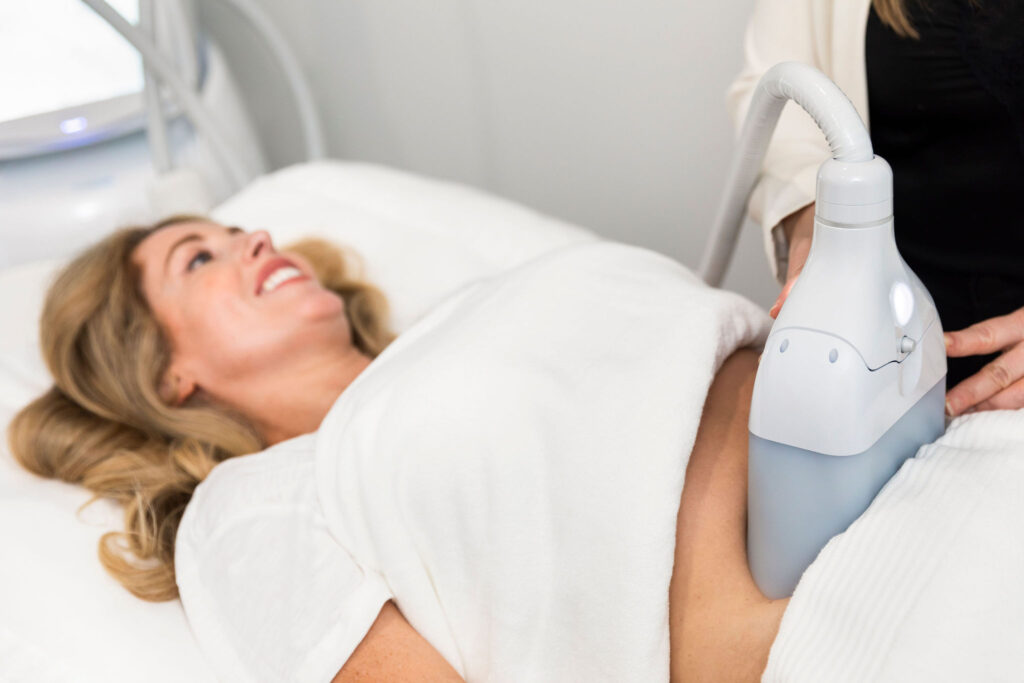
So you’ve done the hard work, lost the weight after delivery, but now you’re looking down at a belly that just won’t bounce back. Loose belly skin is one of the most common body concerns we hear at Body Catalyst, and it’s also one of the most misunderstood.
Whether it appeared after weight loss, pregnancy, or simply with age, the question of how to tighten up loose belly skin doesn’t have a single answer. What works depends on what’s caused it, how much skin laxity you’re dealing with, and what your body is doing now.
This guide explains the real reasons belly skin loses its firmness, what lifestyle changes can (and can’t) achieve, and the clinically proven non-surgical treatments that produce visible, lasting results. We’ll also cover when surgery is the best option.
Key Insights
- Loose belly skin occurs when collagen and elastin fibres are stretched beyond their ability to recoil, often after weight loss, pregnancy, or with age.
- Mild laxity often responds well to lifestyle changes (such as strength training, hydration, protein, and gradual weight loss).
- Moderate laxity is where non-surgical clinical treatments work best, such as HIFU, radiofrequency, and combined fat-and-skin treatments.
- Severe laxity (apron-like skin after major weight loss) usually needs surgical intervention to fully resolve.
- Postpartum, it’s worth waiting 6–12 months and checking for diastasis recti before assessing skin laxity.
Why Belly Skin Loses Elasticity
Your skin’s structure depends on two key proteins: collagen, which provides strength, and elastin, which provides recoil. Collagen makes up around 70–80% of your skin’s dry weight, while elastin, though only 2–4%, is responsible for the snap-back you rely on every time skin stretches and returns.
From your mid-20s onwards, collagen production declines by roughly 1–1.5% per year. By your 50s, that adds up to a significant loss of structural support, which is part of why skin doesn’t bounce back the way it used to. Layered on top of that natural decline are the specific events that stretch belly skin most:
Rapid Weight Loss
When skin stretches over time and then deflates quickly, collagen and elastin fibres can be permanently damaged. The faster the weight loss (including with GLP-1 medications and very low-calorie diets), the less time your skin has to retract.
Pregnancy
Skin stretches significantly over nine to ten months. Most women see some retraction after delivery, but not always full recovery, especially after multiple pregnancies, twins, or larger babies.
Age
Intrinsic ageing reduces fibroblast activity, the cells responsible for producing collagen and elastin. This slows your skin’s natural repair. Research outlines how this shows up as thinner, less resilient skin over time.
Sun Damage
UV exposure is the single biggest external accelerator of skin ageing, breaking down collagen and degrading elastin fibres.
Genetics
Some people are simply born with more elastic skin. If skin laxity runs in your family, you may be more prone to it regardless of how well you look after yourself.
How to Assess the Severity (The Pinch Test)
Before deciding on a treatment path, it helps to understand where you sit on the laxity scale. A simple at-home check called the pinch test gives you a useful starting point.
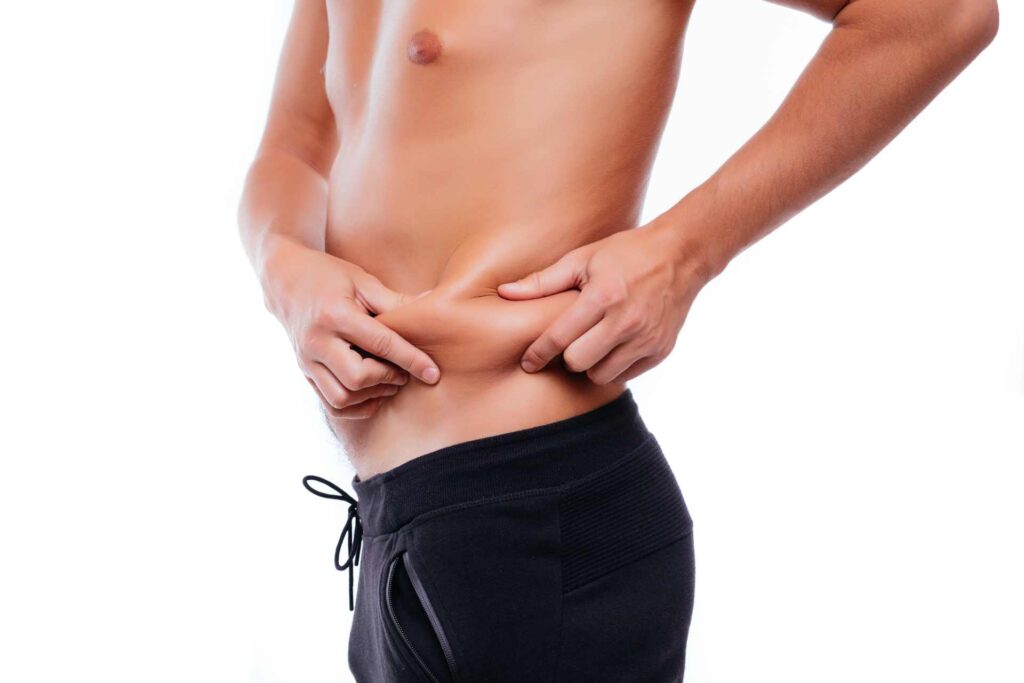
Pinch a section of your belly skin between your thumb and index finger, then let go and watch how it responds.
- Mild laxity: Skin snaps back almost immediately. The looseness is only really visible when you pinch the area or lean forward. This is the strongest territory for non-surgical treatments combined with lifestyle changes.
- Moderate laxity: Skin is visibly loose at rest. There’s a noticeable softness when you sit down. Non-surgical clinical treatments can deliver real, measurable results here.
- Severe laxity: You can lift a fold of skin away from your body. There’s an “apron” of redundant skin that often hangs over the waistband. At this level, surgical removal is usually the only option that fully addresses the issue.
Matching the severity to the right approach is what makes the difference between seeing real change and feeling like nothing’s working.
Natural Methods: What Lifestyle Changes Can Do
Lifestyle changes are the foundation of any skin-tightening plan. They won’t reverse severe sagging on their own, but they can help your skin look and feel its best, especially when paired with the right clinical treatment.
Strength Training
Building muscle underneath loose skin gives the area more structure and visible definition. Compound lifts, planks, dead bugs, and Pallof presses build the deeper core layer that supports overhead skin. Resistance training also improves overall body composition, which in turn improves how skin sits.
Protein Intake
Your body needs amino acids to synthesise collagen. Your body needs amino acids to synthesise collagen. Around 1.2–1.6 g of protein per kilogram of body weight per day is a solid target if you’re actively training and trying to support skin and muscle recovery. Lean meats, fish, eggs, legumes, and dairy are great sources of protein.
Nutrition
Vitamin C is essential for collagen synthesis. Capsicum, citrus, berries, broccoli, and leafy greens are all good sources. Zinc, copper, and vitamin A play supporting roles, too.
Hydration
Well-hydrated skin looks plumper and firmer. Aim for around 2 litres of water a day, more if you’re exercising or in a hot climate.
Daily SPF
UV exposure breaks down the collagen you have left. In Australia, daily SPF 50+ protection is one of the most useful long-term steps you can take for your skin.
Topical Creams
Over months, retinol can stimulate collagen production in the upper layers of skin, while peptides can support the skin barrier. They’re a worthwhile addition, but topicals reach the epidermis and upper dermis, not the deeper structural layers where moderate laxity lives.
Gradual Weight Loss
If you’re still working towards a goal weight, slow and steady gives your skin the best chance to retract along the way. Crash diets and rapid drops leave less time for collagen remodelling.
What lifestyle won’t do? Reverse moderate-to-severe laxity. No cream, no exercise plan, no supplement is going to remove excess skin.
Non-Surgical Clinical Treatments: Where the Real Tightening Happens
For mild to moderate laxity, modern non-invasive technologies can stimulate collagen remodelling deep in the skin without surgery or needles.
HIFU (High-Intensity Focused Ultrasound)
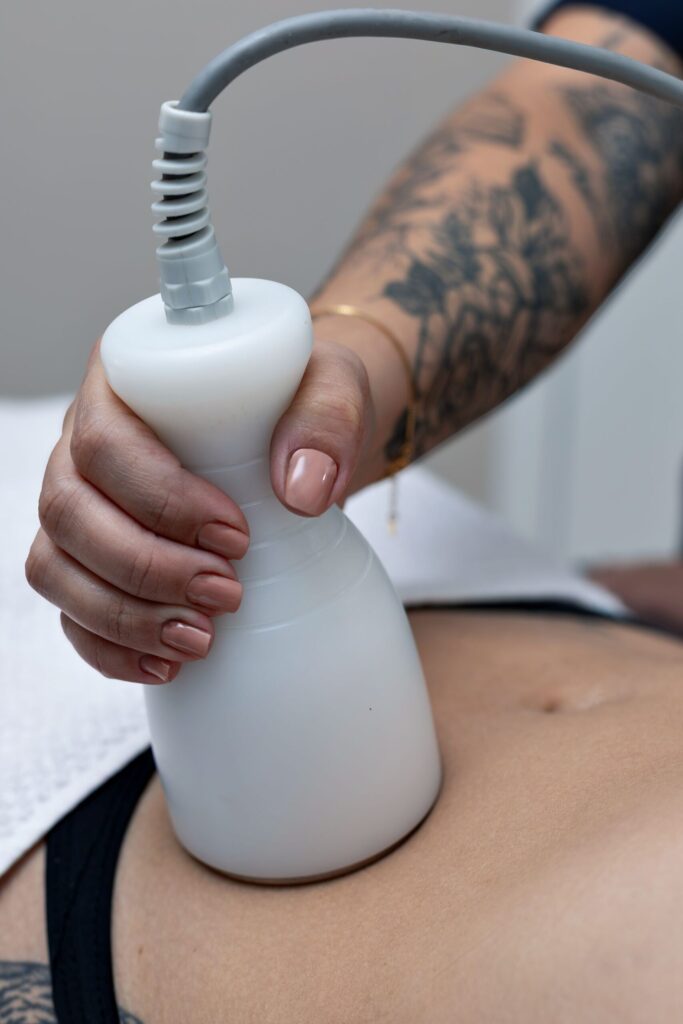
HIFU delivers focused ultrasound energy beyond the surface and into deeper structural layers of the skin, heating tissue to the point that triggers a wound-healing response. The result? New collagen production over the following months.
A systematic review published in the Aesthetic Surgery Journal in 2025, which analysed 45 clinical trials, found that HIFU produced skin tightening efficacy ranging from 18% to 30%, with circumference reductions of 2.5 to 4.5 cm in body areas, including the abdomen and thighs. A separate clinical study in Skin Research and Technology showed significantly improved skin elasticity at 12 weeks post-treatment on the lower abdomen.
Because you’re stimulating new collagen formation, results aren’t immediate, taking 8–12 weeks to fully appear. Our HIFU non-surgical facelift uses the same underlying technology to lift and firm. On the body, it works to tighten and contour.
Radiofrequency (RF) Skin Tightening
RF uses radio-wave energy to heat the dermis and stimulate collagen contraction and renewal. It’s gradual and typically requires a course of 6–10 sessions, but it’s particularly suited to moderate laxity and crepey skin texture.
A 2024 clinical trial involving women aged 28–42 with abdominal skin laxity found that combining low-intensity focused ultrasound with radiofrequency over six sessions produced measurable improvements in dermal thickness, abdominal circumference, and overall appearance.
Our skin tightening treatments use medical-grade RF and HIFU technologies, often layered for compounding effect.
Fat Freezing + Skin Tightening
If you’re working out how to tighten belly skin after weight loss, but you’ve still got some stubborn fat sitting on top of (or under) that loose skin, treating both at once produces the most complete result.
Fat freezing (cryolipolysis) targets and permanently eliminates fat cells in the treated area, while skin-tightening treatments stimulate collagen production beneath the skin. A study on combined high-power radiofrequency for body contouring reported a 29% average reduction in fat layer thickness, along with measurable improvements in skin firmness and elasticity.
This is the principle behind treatment stacking: addressing multiple contributors to loose belly skin in the same plan, rather than treating one and hoping for the best.
When Surgery is the Only Realistic Option
Surgery is generally the appropriate path when:
- You’ve lost significant weight (often 30 kg+) with substantial skin redundancy.
- Multiple pregnancies have left severe loose skin and/or unresolved diastasis recti.
- You can lift a clear fold of skin that hangs below your natural waistline.
- Non-surgical treatments aren’t suited to the scale of the issue.
The right person to have that conversation with is a board-certified plastic surgeon. After surgery, if you want to combine recovery with non-surgical maintenance later on, our team is here to help.
Postpartum Belly Skin: What You Need to Know
If you’re reading this in the early months after giving birth, the most useful advice we can offer is to slow down before booking anything.
Wait 6–12 months before assessing. Your body is still recovering well past the standard six-week postpartum check. Hormones are shifting, your uterus continues returning to size, and your skin retracts at its own pace. Treating skin at three months postpartum often means treating skin that would have improved on its own by month nine.
Check for diastasis recti first. Diastasis recti is the separation of the abdominal muscles along the linea alba, and it’s more common than most women realise. A 2024 cross-sectional study published in Scientific Reports found that 36% of women still had diastasis recti three years postpartum, with prevalence remaining around 22–30% even decades later. If your “loose skin” is actually a muscle separation, no skin-tightening treatment will resolve it. You’ll need pelvic floor physiotherapy and targeted core rehabilitation first, which we can help with our TeslaFormer and TeslaChair treatments. The TeslaFormer uses Functional Magnetic Stimulation to deeply activate and rebuild the abdominal muscles, while the TeslaChair helps strengthen the pelvic floor.
You can do a quick at-home check:
- Lie on your back with knees bent
- Lift your head slightly off the floor
- Press two fingers gently into your midline above and below your belly button
A gap wider than two fingers (or about 2 cm) suggests diastasis recti. A women’s health physiotherapist or your GP can confirm.
Once muscle integrity is sorted and you’re 6+ months out, that’s the right point to assess loose skin concerns and contouring options. Our mummy makeover concern page covers how we approach postpartum bodies in more detail.
Reclaim Your Confidence with Body Catalyst
Done your research on how to tighten up loose belly skin, and seeking non-surgical treatments? The Body Catalyst team is ready to help.
We’ve worked with over 40,000 clients across Australia and New Zealand, and we’ve seen every version of this story. The belly after a baby, the post-significant-weight-loss belly, and the one that comes with age. This is your judgement-free zone.
Start with a complimentary consultation for a treatment plan that’s tailored to your needs.