Learn how to get rid of cellulite with expert tips and proven treatments. Discover solutions that work—take control of your skin today at Body Catalyst.
Remove sun spots safely with SQT Bio-Microneedling at Body Catalyst. Reveal brighter, even skin. Book your sun spot removal treatment in Australia today!
Discover visible skin tightening results from your first treatment. Learn how Body Catalyst can help you achieve firmer skin. Book your consultation now!
Discover advanced NOTOX treatments in Australia for youthful skin. Book your consultation with Body Catalyst and experience the NOTOX revolution today!
When considering any cosmetic treatment, safety should be your primary concern. In Australia, we’re fortunate to have one of the world’s most rigorous regulatory frameworks governing medical devices and therapeutic goods. Understanding how these systems protect you can help you make informed decisions about fat freezing treatments and choose providers who prioritise your wellbeing.
What is the TGA and Why Does It Matter?
The Therapeutic Goods Administration (TGA) is Australia’s regulatory authority for therapeutic goods, including medicines, medical devices, and biologicals. Operating as part of the Australian Government Department of Health and Aged Care, the TGA ensures that products available to Australian consumers meet stringent standards for safety, quality, and performance.
Think of the TGA as the guardian standing between you and potentially unsafe medical devices. Before any cryolipolysis device can legally be used in Australia, it must pass the TGA’s rigorous evaluation process. This isn’t merely a paperwork exercise the TGA examines clinical evidence, manufacturing standards, and safety data to verify that devices perform as claimed without unacceptable risks.
The TGA’s responsibilities closely parallel those of the United States Food and Drug Administration (FDA), though with some important differences. While the FDA operates with a substantially larger budget and staff, the TGA maintains equally high standards through a risk-based regulatory approach. Both agencies require pre-market assessment of medical devices, post-market surveillance, and adherence to strict manufacturing quality standards.
For consumers, the TGA’s involvement means every legitimate fat freezing device in Australia has undergone independent scrutiny. Providers cannot simply import unverified equipment from overseas and begin offering treatments the regulatory framework prevents this, protecting you from devices that may be ineffective or dangerous.
ARTG Registration: What the Numbers Mean
The Australian Register of Therapeutic Goods (ARTG) is the public database of all therapeutic goods legally approved for supply in Australia. Every registered medical device receives a unique ARTG number, which serves as verifiable proof that the product has met Australian regulatory requirements.
Understanding ARTG numbers empowers you as a consumer. When a clinic claims their device is “TGA approved,” you can verify this yourself. Simply visit the TGA website (tga.gov.au) and search the ARTG database using the device name or ARTG number. The search results will confirm whether the device is legitimately registered and provide details about its classification and intended use.
Body Catalyst’s Device Registrations:
The Clatuu 360° technology used at Body Catalyst holds current ARTG registration. The Clatuu Alpha (CL5-M500) cryolipolysis system is registered under ARTG #489846, with registration confirmed on 26 May 2025. This registration verifies that the device has been assessed by the TGA and meets Australian standards for safety and performance. The device is sponsored by Classys Australia Pty Ltd and manufactured by Classys Inc, a Korean medical device company specialising in aesthetic technology.
The original Clatuu device family also maintains registrations under ARTG #243432 and #259035, demonstrating the manufacturer’s ongoing commitment to regulatory compliance across their product range.
How to Verify Device Registration:
Visit tga.gov.au
Navigate to the ARTG search function
Enter the device name (e.g., “Clatuu”) or ARTG number
Review the registration details, including classification and sponsor information
This verification process takes only minutes but provides invaluable peace of mind. Any reputable clinic should readily provide their device’s ARTG number upon request.
Class IIb Medical Device: What This Classification Means for Your Safety
Medical devices in Australia are classified according to their risk level, following a system comparable to European Union and FDA frameworks. The classification ranges from Class I (lowest risk) through Class IIa and IIb to Class III and Active Implantable Medical Devices (highest risk).
Cryolipolysis devices like the Clatuu Alpha are classified as Class IIb, indicating moderate-to-high risk medical devices. This classification triggers several important regulatory requirements that protect consumers:
Conformity Assessment Certification:
Class IIb devices cannot simply be self-certified by manufacturers. They require conformity assessment certification from either the TGA or a recognised European Notified Body before inclusion in the ARTG. This certification verifies that:
The device meets Essential Principles for safety and performance
Manufacturing processes follow quality management standards (typically ISO 13485)
Clinical evidence supports the device’s intended use
Risk management processes are in place
Technical documentation is comprehensive and accurate
Ongoing Compliance Requirements:
Registration is not a one-time event. Sponsors must maintain ongoing compliance, including post-market surveillance, adverse event reporting, and notification of any device modifications. Annual fees are required to maintain ARTG registration, ensuring continued oversight.
What This Means for You:
When you receive treatment with a Class IIb device like the Clatuu Alpha, you benefit from multiple layers of regulatory protection. The device has been independently assessed, the manufacturer’s quality systems have been audited, and clinical evidence supports its safety and efficacy. This stands in stark contrast to unregistered devices that bypass these safeguards entirely.
How TGA Compares to International Regulators
Understanding how Australian regulation compares to international standards provides useful context. The TGA is globally respected and actively participates in the International Medical Device Regulators Forum, working to align regulatory approaches across jurisdictions.
Aspect
TGA (Australia)
FDA (United States)
CE Marking (Europe)
Regulatory Body
Therapeutic Goods Administration
Food and Drug Administration
European Notified Bodies
Registration Database
ARTG
FDA Database
EUDAMED
Risk Classification
Class I, IIa, IIb, III
Class I, II, III
Class I, IIa, IIb, III
Pre-market Review
Required for higher classes
Required for most devices
Required via Notified Bodies
Post-market Surveillance
Mandatory
Mandatory
Mandatory
Mutual Recognition
Accepts EU and FDA evidence
Independent assessment
Requires CE marking
The TGA accepts conformity assessment evidence from FDA clearances and EU Notified Bodies, which can streamline registration for devices already approved overseas. However, the TGA maintains its own application audit process to ensure devices meet Australian-specific requirements. This combination of international harmonisation with local oversight provides Australian consumers with robust protection.
Practitioner Requirements in Australia: AHPRA & Training Standards
Device safety is only part of the equation—practitioner qualifications matter equally. In Australia, the Australian Health Practitioner Regulation Agency (AHPRA) regulates health practitioners across 16 professions, ensuring they meet appropriate standards of training and conduct.
For non-surgical cosmetic procedures, practitioners must hold current AHPRA registration in their relevant profession (medicine, nursing, dentistry, etc.). The Medical Board of Australia and Nursing and Midwifery Board of Australia have specific guidelines governing cosmetic procedure practice.
Key practitioner requirements include:
Current AHPRA registration (verifiable at ahpra.gov.au)
Appropriate training and competency in the specific procedures performed
Working within their scope of practice
Maintaining professional indemnity insurance
Adhering to informed consent requirements
Catalyst Collective Academy:
At Body Catalyst, every therapist undergoes training through the Catalyst Collective Academy, our standardised training program. This ensures consistent, expert care across all locations. The Academy provides comprehensive education on cryolipolysis technology, patient assessment, treatment protocols, and safety procedures, supplementing practitioners’ foundational qualifications with device-specific expertise.
2025 Regulatory Updates: New AHPRA Cosmetic Guidelines
On 2 September 2025, significant new guidelines came into effect governing non-surgical cosmetic procedures in Australia. These represent the most substantial regulatory reform of the cosmetic industry in years, developed following extensive review by AHPRA and the National Boards.
Key Changes Include:
Enhanced Informed Consent: Practitioners must conduct thorough consultations discussing risks, benefits, and alternatives. Both verbal discussions and written information in plain language are required. Information cannot minimise procedure complexity or overstate achievable outcomes.
Cooling-Off Periods: For patients under 18, a mandatory seven-day cooling-off period applies between consent and procedure. Payment cannot be accepted until after this cooling-off period (except for initial consultation fees). This protects younger patients from impulsive decisions influenced by social media or peer pressure.
Prescribing Requirements: Real-time consultation (in-person or video) is required for cosmetic injectable prescriptions. Asynchronous prescribing via text, email, or online questionnaires is explicitly prohibited. Each prescription must be individual—batch prescribing is banned.
Training Requirements: Nurses must complete 12 months of full-time practice in general or specialist nursing before expanding their scope to include non-surgical cosmetic procedures.
Advertising Restrictions: Influencer testimonials in advertising are banned. Advertising cosmetic procedures to under-18s is prohibited, with higher-risk procedure advertising required to be marked as adult content on social media platforms.
These guidelines place patient safety at the centre of cosmetic practice, ensuring consumers receive thorough information and adequate time to make considered decisions.
How Body Catalyst Meets Australian Standards
Regulatory compliance isn’t merely about checking boxes. It reflects an organisation’s commitment to patient safety. At Body Catalyst, meeting and exceeding Australian standards is fundamental to our operations.
Our Compliance Commitment:
TGA-Registered Technology: The Clatuu Alpha devices used across our clinics maintain current ARTG registration (#489846), ensuring you receive treatment with properly assessed, regulated equipment.
Standardised Training: The Catalyst Collective Academy provides consistent, comprehensive training for all therapists, ensuring expertise regardless of which Body Catalyst location you visit.
Thorough Consultations: Our consultation process aligns with AHPRA guidelines, providing complete information about treatments, realistic expectations, and appropriate patient assessment.
Quality Systems: Our operational protocols reflect best practice standards for hygiene, safety, and patient care.
Red Flags: Signs a Provider May Not Be Compliant
Protecting yourself requires knowing what warning signs to watch for. The following indicators suggest a provider may not meet Australian regulatory standards:
Device-Related Concerns:
Unable or unwilling to provide ARTG registration numbers
Vague answers about device manufacturer or model
Significantly lower prices than established providers (may indicate unregistered equipment)
Claims their device is “approved” without verifiable registration
Practice-Related Concerns:
Practitioners not listed on AHPRA register
Pressure to make immediate decisions without consultation time
Treatments offered in non-clinical settings (homes, hotels, temporary locations)
No written information about risks and aftercare
Unwillingness to discuss qualifications or training
No clear complaints process or aftercare support
Marketing Red Flags:
Guaranteed results or “too good to be true” claims
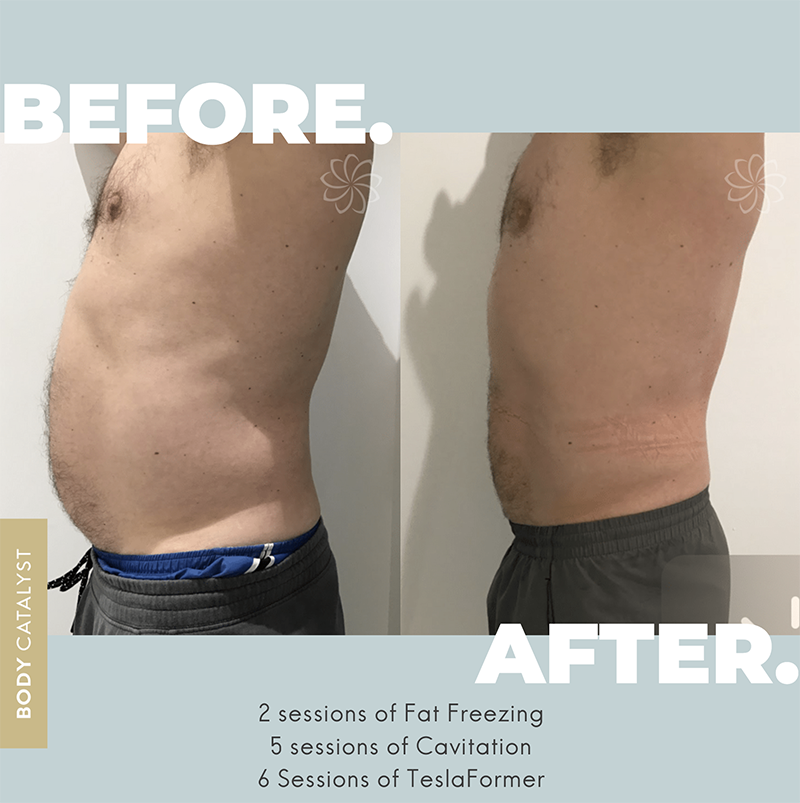
Heavy reliance on unverifiable before/after images
Targeting advertising specifically at under-18s
High-pressure sales tactics or limited-time offers
If you encounter these warning signs, consider seeking treatment elsewhere. Your safety is worth more than any discount or convenience.
Your Safety, Our Priority
Understanding Australia’s regulatory framework empowers you to make informed decisions about fat freezing treatments. The TGA, ARTG, and AHPRA work together to ensure medical devices are safe and practitioners are qualified—but you play an important role too. Ask questions, verify registrations, and choose providers who demonstrate genuine commitment to compliance.
At Body Catalyst, we believe transparency builds trust. We’re proud of our TGA-registered technology, our trained therapists, and our alignment with Australian regulatory standards. When you choose Body Catalyst, you choose a provider who takes your safety as seriously as you do.
Ready to learn more about fat freezing with a provider you can trust? Book your free consultation today and experience the Body Catalyst difference where science, safety, and results come together.
BOOK A FREE CONSULTATION
Book a complimentary consultation with our Aesthetic & Wellness Therapists. During your complimentary consultation, your body expert will help answer any questions you may have about the technology and treatment process. From there, we will work with you to customise and recommend the best treatment program options to help you achieve your body goals.
To provide the best experiences, we use technologies like cookies to store and/or access device information. Consenting to these technologies will allow us to process data such as browsing behavior or unique IDs on this site. Not consenting or withdrawing consent, may adversely affect certain features and functions.
Functional
Always active
The technical storage or access is strictly necessary for the legitimate purpose of enabling the use of a specific service explicitly requested by the subscriber or user, or for the sole purpose of carrying out the transmission of a communication over an electronic communications network.
Preferences
The technical storage or access is necessary for the legitimate purpose of storing preferences that are not requested by the subscriber or user.
Statistics
The technical storage or access that is used exclusively for statistical purposes.The technical storage or access that is used exclusively for anonymous statistical purposes. Without a subpoena, voluntary compliance on the part of your Internet Service Provider, or additional records from a third party, information stored or retrieved for this purpose alone cannot usually be used to identify you.
Marketing
The technical storage or access is required to create user profiles to send advertising, or to track the user on a website or across several websites for similar marketing purposes.