Learn how to get rid of cellulite with expert tips and proven treatments. Discover solutions that work—take control of your skin today at Body Catalyst.
Remove sun spots safely with SQT Bio-Microneedling at Body Catalyst. Reveal brighter, even skin. Book your sun spot removal treatment in Australia today!
Discover visible skin tightening results from your first treatment. Learn how Body Catalyst can help you achieve firmer skin. Book your consultation now!
Discover advanced NOTOX treatments in Australia for youthful skin. Book your consultation with Body Catalyst and experience the NOTOX revolution today!
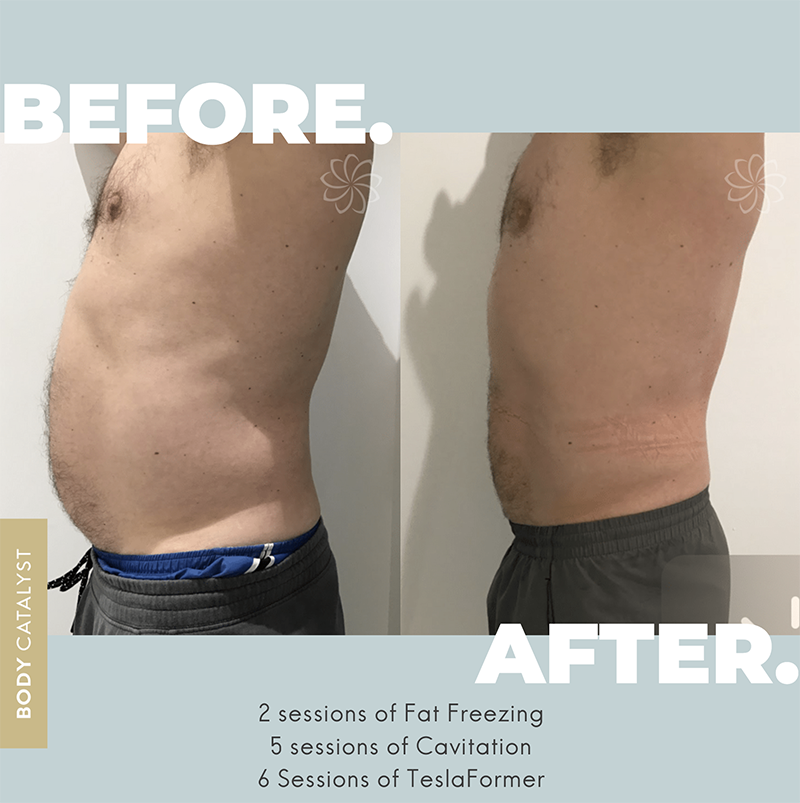
Fat freezing works exceptionally well for the right candidate. The difference isn’t about luck. It’s about understanding what cryolipolysis can and cannot do, and whether your body and goals align with this treatment.
This guide helps you determine whether you’re likely to see meaningful results before you book a consultation. We’ve treated over 40,000 clients at Body Catalyst, and the patterns are clear: candidates who meet specific criteria consistently achieve visible fat reduction, while those who don’t are more aligned to a different treatment plan.
Quick Self-Assessment
Answer these five questions honestly:
Can you pinch at least 20mm (about an inch) of fat in your problem area?
Have you maintained a stable weight for at least 3 months?
Is your stubborn fat resistant to diet and exercise?
Are you looking for body contouring rather than weight loss?
If you answered “yes” to all five, you’re likely an excellent candidate. If you answered “no” to one or two, you may still be suitable depending on other factors, a consultation can clarify. If you answered “no” to three or more, cryolipolysis probably isn’t the right treatment for you right now.
The Ideal Fat Freezing Candidate: A Complete Checklist
20mm Minimum Pinchable Fat
This is the physical requirement that determines whether the treatment can even work on your target area. The applicator must draw tissue into a cooling cup using vacuum suction. If there isn’t enough pinchable fat, the applicator cannot achieve proper contact.
The minimum threshold is approximately 20mm (roughly one inch) of fat that you can pinch between your fingers.
Stubborn Fat That Resists Diet and Exercise
The ideal candidate has already done the work. You eat reasonably well. You exercise regularly or semi-regularly. Despite these efforts, certain areas simply won’t budge.
This describes subcutaneous fat deposits that are genetically determined—where your body preferentially stores fat based on your individual physiology. Common stubborn areas include:
Lower abdomen (below the belly button)
Love handles (flanks)
Upper back (bra bulge area)
Inner and outer thighs
Upper arms
Double chin (submental fat)
If you haven’t yet established healthy eating and exercise habits, start there first. Fat freezing isn’t a shortcut around lifestyle—it’s a tool for addressing what lifestyle alone cannot fix.
Good General Health
You should be in good overall health without conditions that would make cold exposure problematic. This means no cold-sensitivity disorders, normal skin sensation in the treatment area, and no active infections or skin conditions where treatment would occur.
Realistic Expectations
Perhaps the most important criterion: understanding what you’re signing up for. Fat freezing produces gradual, subtle refinement, not dramatic transformation. Candidates with realistic expectations report high satisfaction. Those expecting liposuction-level results from a non-surgical treatment often feel disappointed.
The Pinch Test: Can You Grab 20mm of Fat?
This simple self-assessment helps determine whether you have enough pinchable fat for effective treatment.
How to Perform the Pinch Test
Step 1: Stand in front of a mirror in your normal relaxed posture (don’t suck in your stomach).
Step 2: Using your thumb and forefinger, pinch the skin and underlying fat in your area of concern. Don’t just pinch the skin—gather the fat tissue beneath it.
Step 3: Pull the pinched tissue away from your body slightly, as if you were mimicking the vacuum suction of the applicator.
Step 4: Look at the thickness of what you’ve pinched. Is it approximately the width of your thumb (about 20mm) or more?
Interpreting Your Results
More than 25mm: Excellent candidate. You have plenty of pinchable fat for the applicator to work with.
20-25mm: Good candidate. This is within the treatable range, though a consultation will confirm whether the specific area is suitable.
15-20mm: Borderline. Some areas with this thickness can be treated effectively depending on the location and fat distribution. A practitioner assessment is needed.
Less than 15mm: Not currently suitable. There isn’t enough fat for the applicator to draw in effectively. Consider whether you’re actually close to your ideal body composition already.
What the Pinch Test Tells You
The pinch test identifies subcutaneous fat, the fat directly beneath your skin that cryolipolysis can target. If you can pinch a substantial amount, that fat is accessible to treatment.
What you cannot assess with the pinch test is visceral fat, the fat stored around your organs deep within your abdominal cavity. You cannot pinch visceral fat. If your abdomen feels firm rather than soft, with fat that won’t pinch away from the muscle wall, that’s likely visceral fat, which requires weight loss through diet and exercise rather than fat freezing.
Body Contouring vs Weight Loss: Understanding the Difference
This distinction matters more than almost anything else in setting appropriate expectations.
Fat Freezing Is Body Contouring
Cryolipolysis reduces localised fat deposits by eliminating fat cells in targeted areas. It changes your shape by reducing specific bulges.
Body contouring:
Targets specific areas
Reduces fat cells in those areas by 20-25% per session
Changes proportions and contours
Does not significantly change the number on your scale
Works best on people already near their goal weight
Fat Freezing Is NOT Weight Loss
If you need to lose significant weight, fat freezing is not the answer. A treatment that reduces 20-25% of fat in a localised area might eliminate a few hundred grams of tissue, not kilograms of body weight.
Weight loss:
Reduces overall body fat through caloric deficit
Shrinks fat cells throughout your entire body
Changes the number on your scale
Should come before body contouring for those who need it
A Practical Example
Consider two people, both with stubborn lower belly fat:
Person A weighs 65kg, exercises three times per week, eats well, but cannot shift their lower belly pooch despite years of effort. Fat freezing reduces this pooch by 20-25%, creating a flatter stomach profile. They’re thrilled with the result.
Person B weighs 95kg, doesn’t exercise regularly, and has excess fat throughout their body. They get the same 20-25% reduction in their lower belly, but because of their overall body composition, the change is barely visible. They’re disappointed.
Same treatment. Same fat reduction percentage. Completely different experience, because one was an appropriate candidate and one wasn’t.
Who Should NOT Get Fat Freezing
While a detailed contraindications guide covers this comprehensively, these are the key groups who should avoid cryolipolysis:
Medical Contraindications
Do not proceed with fat freezing if you have:
Cryoglobulinemia — a condition where abnormal proteins in your blood solidify in cold temperatures
Cold urticaria — an allergic reaction to cold that produces hives
Paroxysmal cold hemoglobinuria — a rare blood disorder triggered by cold exposure
Raynaud’s phenomenon — impaired blood circulation in extremities when exposed to cold
Relative Contraindications
Discuss with your practitioner if you have:
Loose skin or poor skin elasticity in the treatment area
Recent surgery near the intended treatment site
Active skin conditions (eczema, dermatitis, psoriasis) in the treatment area
Hernia or structural weakness in or near the treatment zone
Neuropathy or reduced sensation in the treatment area
Not Currently Suitable
Consider waiting or pursuing alternatives if you:
Are significantly overweight (BMI over 35)
Are pregnant or breastfeeding
Have less than 20mm of pinchable fat in your target area
Expect fat freezing to help you lose weight
Cannot commit to maintaining results through stable weight
What Happens at Your Consultation
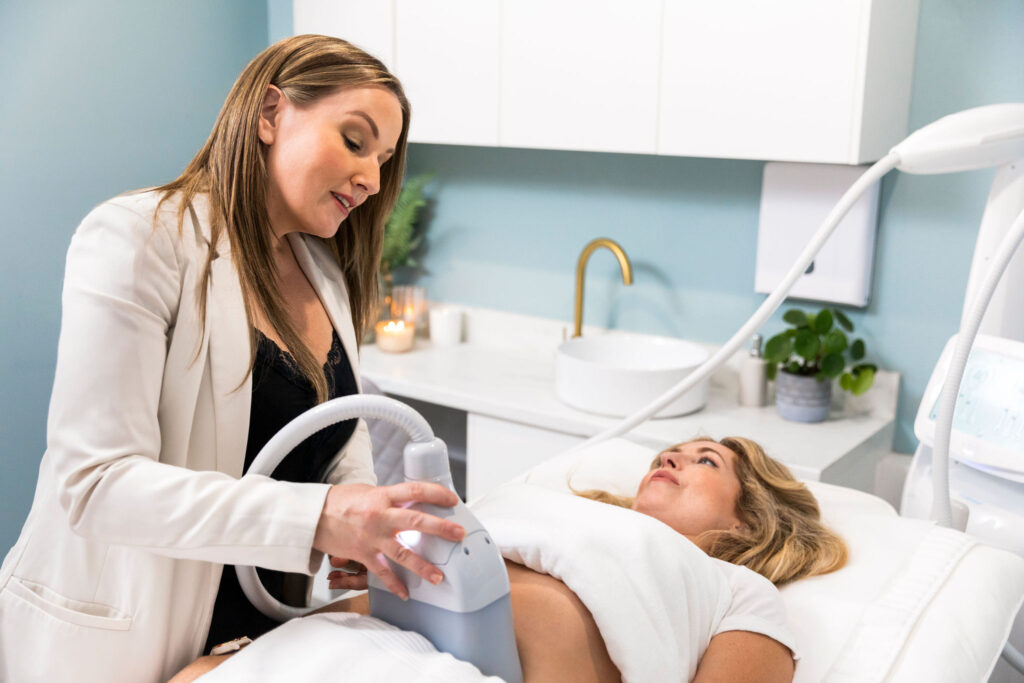
At Body Catalyst, consultations are complimentary and designed to determine your suitability before any commitment. Here’s what to expect:
Initial Discussion
Your consultant begins by understanding your goals. What areas concern you? What results are you hoping for? What have you tried already? This conversation establishes whether your expectations align with what cryolipolysis can deliver.
Physical Assessment
With your consent, your consultant examines your areas of concern. This includes:
Visual assessment — Looking at fat distribution, skin quality, and body proportions
Pinch test — Physically assessing fat thickness to confirm treatability
Applicator matching — Determining which applicator shapes and sizes would best fit your anatomy
Photography — Taking baseline photos (with consent) for before/after comparison
Medical History Review
You’ll discuss relevant medical history to identify any contraindications. This isn’t an exhaustive medical examination—it’s a targeted screening for conditions that affect treatment safety.
Treatment Planning
If you’re confirmed as a suitable candidate, your consultant develops a customised treatment plan:
Which areas to treat
How many applicator placements per area
Expected number of sessions
Realistic timeline for visible results
Investment required
Questions and Decision
There’s no pressure to book immediately. Good consultations answer all your questions and give you the information needed to make an informed decision. You should leave knowing exactly what to expect—both the benefits and limitations.
Real Expectations: What Results Can You Achieve?
Setting accurate expectations prevents disappointment and helps you evaluate whether the investment makes sense for you. Do you want to see real life examples? Visit our before-after gallery here.
Fat Reduction Percentages
Clinical studies consistently show 20-25% fat layer reduction in treated areas after a single session. Some studies report up to 28% reduction. This is measured by caliper testing and ultrasound imaging, not by subjective observation.
What does 20-25% reduction mean in practice? If your love handle fat layer measures 30mm thick, expect it to reduce to approximately 22-24mm. That’s meaningful—but it’s refinement, not transformation.
Timeline for Results
Fat freezing produces gradual results because your body needs time to process and eliminate the destroyed fat cells:
Weeks 1-3: You may notice some change, but most fat cells are still being processed
Weeks 4-8: Visible changes typically begin appearing
Weeks 8-12: Optimal results
Months 3-6: Sometimes minor improvements continue, as all affected fat cells are cleared
This gradual change looks natural—no one will suspect you’ve had a procedure unless you tell them.
Number of Sessions
As a general rule of thumb we recommend 2 sessions for up to a 50% permanent fat reduction. This gives majority of clients their desired goal.
Your consultation determines what’s appropriate for your specific situation.
What Won’t Change
Fat freezing:
Does not tighten loose skin
Does not reduce visceral (deep) fat
Does not change muscle definition
Does not prevent future weight gain
Does not replace healthy lifestyle habits
Maintaining Results
The fat cells eliminated by cryolipolysis are gone permanently. However, your remaining fat cells can still expand if you gain weight. Maintaining results requires maintaining your weight through continued healthy eating and regular activity.
Frequently Asked Questions
Can I get fat freezing if I’m overweight?
It depends on how overweight and your specific goals. If your BMI is higher but you have one specific stubborn area and realistic expectations, you may still be a candidate. A consultation clarifies your individual situation.
How do I know if my fat is pinchable enough?
Perform the pinch test: grab the fat in your target area between your thumb and forefinger and pull it away from your body. If you can pinch at least 20mm (about an inch), you likely have enough fat for treatment.
Will fat freezing help me fit into smaller clothes?
It can help reduce specific bulges that affect how clothes fit—like a smoother stomach line or reduced love handles. However, because it doesn’t significantly change your overall weight, you shouldn’t expect to drop dress sizes.
What if I’m not a good candidate right now?
If you need to lose weight before body contouring would be effective, that’s valuable information. Focus on healthy eating and regular exercise first. Many people return for fat freezing once they’ve reached a more suitable baseline, using it to refine areas that remain stubborn despite their weight loss efforts.
Is the consultation really free?
Yes. Consultations at Body Catalyst are complimentary with no obligation. We’d rather tell you honestly that you’re not a suitable candidate than take your money for a treatment that won’t satisfy you.
BOOK A FREE CONSULTATION
Book a complimentary consultation with our Aesthetic & Wellness Therapists. During your complimentary consultation, your body expert will help answer any questions you may have about the technology and treatment process. From there, we will work with you to customise and recommend the best treatment program options to help you achieve your body goals.
To provide the best experiences, we use technologies like cookies to store and/or access device information. Consenting to these technologies will allow us to process data such as browsing behavior or unique IDs on this site. Not consenting or withdrawing consent, may adversely affect certain features and functions.
Functional
Always active
The technical storage or access is strictly necessary for the legitimate purpose of enabling the use of a specific service explicitly requested by the subscriber or user, or for the sole purpose of carrying out the transmission of a communication over an electronic communications network.
Preferences
The technical storage or access is necessary for the legitimate purpose of storing preferences that are not requested by the subscriber or user.
Statistics
The technical storage or access that is used exclusively for statistical purposes.The technical storage or access that is used exclusively for anonymous statistical purposes. Without a subpoena, voluntary compliance on the part of your Internet Service Provider, or additional records from a third party, information stored or retrieved for this purpose alone cannot usually be used to identify you.
Marketing
The technical storage or access is required to create user profiles to send advertising, or to track the user on a website or across several websites for similar marketing purposes.