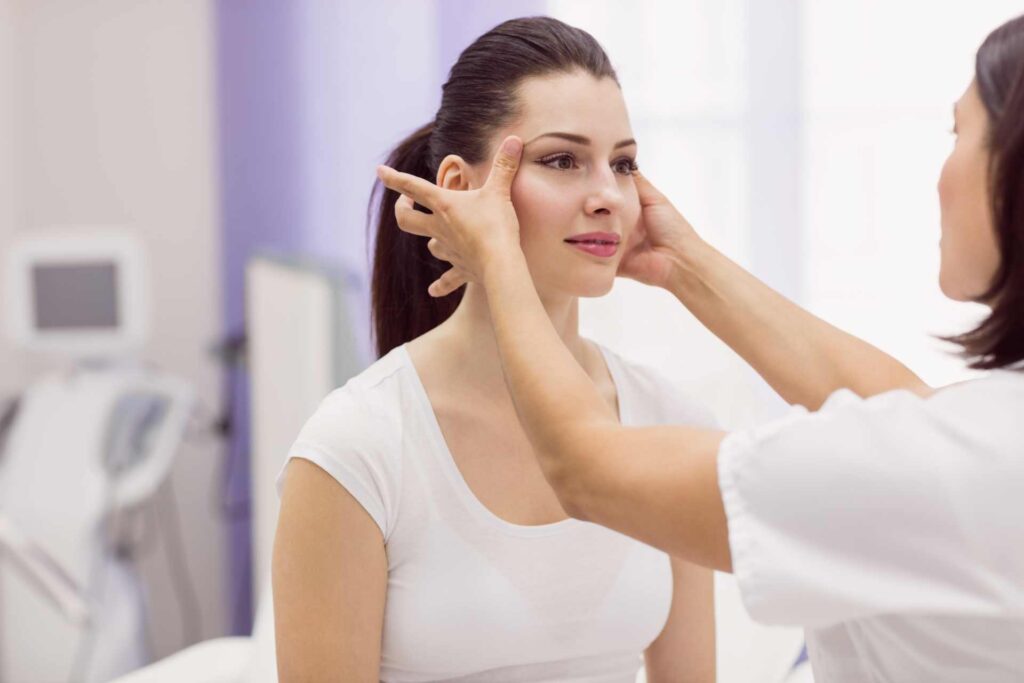
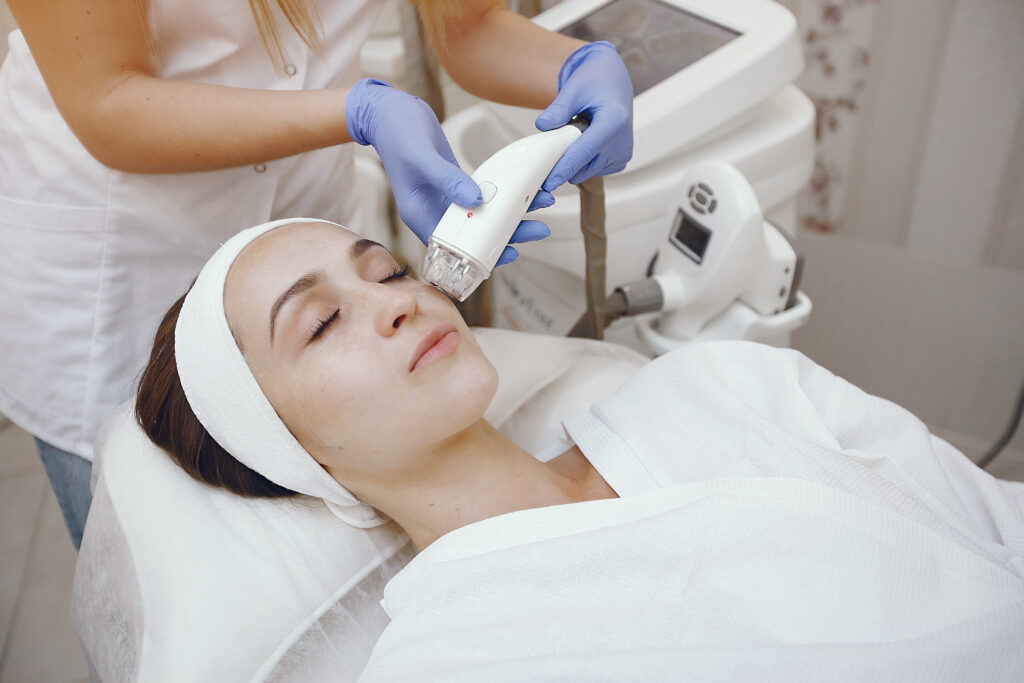
If you’ve been Googling non-surgical facelifts and keep seeing the word HIFU pop up, your next question is naturally: What is HIFU treatment, and is it right for me?
HIFU is one of the most clinically studied non-invasive skin tightening treatments available, and when it’s the right fit for your skin and goals, the results can be meaningful. No scalpels or injections. Just helping your body rebuild, tighten, and lift from within. Let’s take a deep dive into what HIFU is and everything you need to know.
Key Insights
- What is HIFU: HIFU stands for High-Intensity Focused Ultrasound, and is a non-surgical treatment that aims to lift and tighten skin by stimulating collagen production deep beneath the surface
- How does HIFU work: It targets the SMAS layer, the same tissue layer addressed in a surgical facelift
- Results develop gradually over 2–6 months; individual outcomes vary
- Most clients experience minimal discomfort; some temporary redness or tenderness is common post-treatment
- It can be applied to the face, neck, jawline, and select body areas
- It can be combined with other treatments as part of a personalised plan
How Does HIFU Work?
So, what is HIFU treatment, and how does HIFU work? HIFU stands for High-Intensity Focused Ultrasound, and it delivers focused ultrasound energy to precise depths beneath the skin without disturbing the surface. Think of it like a magnifying glass concentrating light onto a single point, except here, the “point” is deep in your skin tissue.
The highly focused energy raises the temperature of the targeted tissue, creating controlled thermal zones at the treatment depth, while the ultrasound beams pass through the outer layers of the skin, leaving them intact.
What does that mean for your skin? Those micro-injuries trigger your body’s natural healing response. Research shows HIFU raises local tissue temperatures to approximately 60–70°C, promoting skin rejuvenation by inducing collagen denaturation, remodelling, and new collagen synthesis.
In plain terms: the treatment creates tiny, controlled zones of heat that signal your body to produce fresh collagen and elastin. And more collagen means firmer, more supported skin over time.
The SMAS Layer: What Makes HIFU Different
Here’s what separates HIFU from most other non-invasive treatments. HIFU’s ability to target deep tissue layers, including the dermis and the superficial musculoaponeurotic system (SMAS), allows it to work at a structural level without incisions or surgery.
The SMAS layer sits at around 4.5mm depth beneath the skin. It’s the same foundational structure that surgeons address during a traditional facelift. HIFU delivers results without a single incision, which is why it’s often described as a non-surgical facelift option and why results tend to look gradual and natural.
Key Benefits of HIFU Treatment
So what does HIFU do for your skin?
- Skin tightening and lifting, particularly in the lower face, neck, and jawline
- Wrinkle and fine line improvement, as collagen production increases over time
- Improved skin laxity. The softened, loosened feeling that comes with age can firm up with treatment
- Gradual, natural-looking change because your own biology is doing the work
- Minimal recovery period – most people return to their usual activities the same day, though some experience temporary redness or tenderness
- Results that build over months, not a one-and-done quick fix, but a progressive improvement
A 2025 systematic review of 45 clinical trials found that HIFU showed significant results in skin tightening, particularly in the lower face, neck, and periorbital regions, with improvements in skin laxity of 18–30% across study participants. Individual results vary.
Areas That Can Be Treated with HIFU
HIFU isn’t just for faces. It’s a flexible treatment that can address a range of concerns across both the face and body.
Face & Neck
- Forehead lines and brow area
- Cheeks and mid-face laxity
- Jowls and lower face
- Under-chin and neck
- Periorbital area (around the eyes)
Jawline & Chin
HIFU is particularly well-suited here, tightening the jaw, reducing the appearance of jowls, and enhancing facial profile definition.
Body Applications
HIFU can also be considered for body areas where skin laxity is the primary concern, such as the abdomen, inner thighs, and arms.
In clinical studies, body contouring applications have documented circumference reductions of 2.5–4.5 cm in areas such as the abdomen and thighs, though results vary between individuals.
At Body Catalyst, our HIFU non-surgical facelift uses Ulfit technology to target the SMAS and deeper dermal layers, complete with a personalised plan customised to your face and goals.
What Results Can You Expect?
HIFU works with your biology, which means results develop gradually. Visible improvements typically emerge within 2–3 months as new collagen matures, with many clients reporting optimal changes around 4–6 months post-treatment. Results vary depending on factors like age, skin condition, and lifestyle.
HIFU results can persist for 12–24 months, after which collagen turnover naturally slows, and a maintenance session may be worthwhile.
A general guide to what to expect:
- Immediately after: Some temporary flushing or tenderness is common; some clients notice subtle initial firmness
- Weeks 1–4: Collagen remodelling begins beneath the surface; no visible change yet for most people
- Months 2–3: Lifting and tightening begin to become visible for many clients
- Months 4–6: Results continue to mature as new collagen fibres fully develop
- Months 12–24+: Gradual, natural progression; a top-up treatment can help maintain the outcome
One session is sufficient for many clients to see noticeable improvement. Those with more advanced skin laxity, or who want to maintain long-term outcomes, may benefit from a course of sessions.
HIFU vs Other Skin Tightening Treatments
Choosing between HIFU and radiofrequency (RF) isn’t really about which one is better, but about which one is right for your skin and what you want to achieve. Both are well-established, non-invasive technologies that support skin tightening and collagen production. The main difference is where they work.
HIFU focuses ultrasound energy at multiple depths beneath the skin, while RF works at the dermal level, delivering heat to the more superficial skin layers to stimulate collagen and improve texture.
Here’s a side-by-side look at how they differ:
|
Factor
|
HIFU
|
Radiofrequency (RF)
|
|
Depth of penetration
|
Deep – SMAS layer (~4.5mm)
|
Dermis – superficial to mid layers
|
|
Primary focus
|
Structural lifting and firming
|
Skin texture, tone, and surface tightening
|
|
Collagen stimulation
|
Deep structural remodelling
|
Collagen boost at the dermal level
|
|
Well-suited for
|
Laxity, sagging, jawline definition
|
Fine lines, skin texture, skin tone
|
|
Recovery
|
Minimal; temporary redness is common
|
Minimal
|
|
Results duration
|
12–24 months (varies by individual)
|
6–12 months (varies by individual)
|
Neither treatment is a one-size-fits-all answer, and many clients benefit from both. If lifting and structural firmness are the priority, HIFU tends to be the starting point. If surface texture, skin tone, or body skin tightening is the focus, RF is an excellent option. And when both concerns are present, combining them into a personalised treatment plan often yields the most well-rounded result.
For broader skin concerns, like hydration, surface texture, or pigmentation, our skin rejuvenation treatments work well alongside HIFU. And if body skin tightening is a priority, skin tightening with RF can complement a HIFU plan for a more layered approach.
That’s where treatment stacking comes in. At Body Catalyst, we combine HIFU with complementary technologies in a personalised plan because the right combination, chosen for your specific goals, often gets you further than any single treatment alone.
Is HIFU Safe? Side Effects and What to Watch For
For most people, HIFU is well tolerated. A 2025 systematic review of 45 clinical trials shows fewer than 5% of participants reported transient redness, swelling, or mild discomfort, a notably favourable safety profile.
Common side effects (typically temporary):
- Mild redness or flushing after treatment
- Tenderness to touch for a day or two
- Tingling or warmth in the treated area
- Occasional mild swelling, particularly around the jawline
These generally resolve within a few hours to a couple of days.
Who HIFU is generally well-suited for:
- Adults with mild to moderate skin laxity
- People exploring non-surgical alternatives to a facelift
- Those wanting gradual, natural-looking skin improvement
- Clients looking to maintain or build on previous treatment results
Who should consult with a practitioner before proceeding:
- Those who are pregnant
- Clients with active skin infections or open wounds in the treatment area
- People with certain implanted devices (e.g., pacemakers)
- Those with very severe skin laxity, who may be better served by other options
Who is HIFU Best Suited For?
HIFU treatment may be worth exploring if you’re noticing your skin starting to soften (around the jaw, neck, and brow) and want to address it without surgery or injectables. It’s not a replacement for surgical procedures, and results are not guaranteed, but for the right candidate, it can support visible, gradual improvement in skin firmness and definition.
It tends to resonate with people navigating:
- Post-baby skin changes, when the face or body hasn’t bounced back the way you’d hoped
- Hormonal and perimenopause-related skin shifts, where collagen loss accelerates, and features begin to look less defined
- The natural ageing process, when you want to take a considered, non-surgical approach to skin health
- A proactive, maintenance mindset to stay ahead of change rather than playing catch-up
FAQs