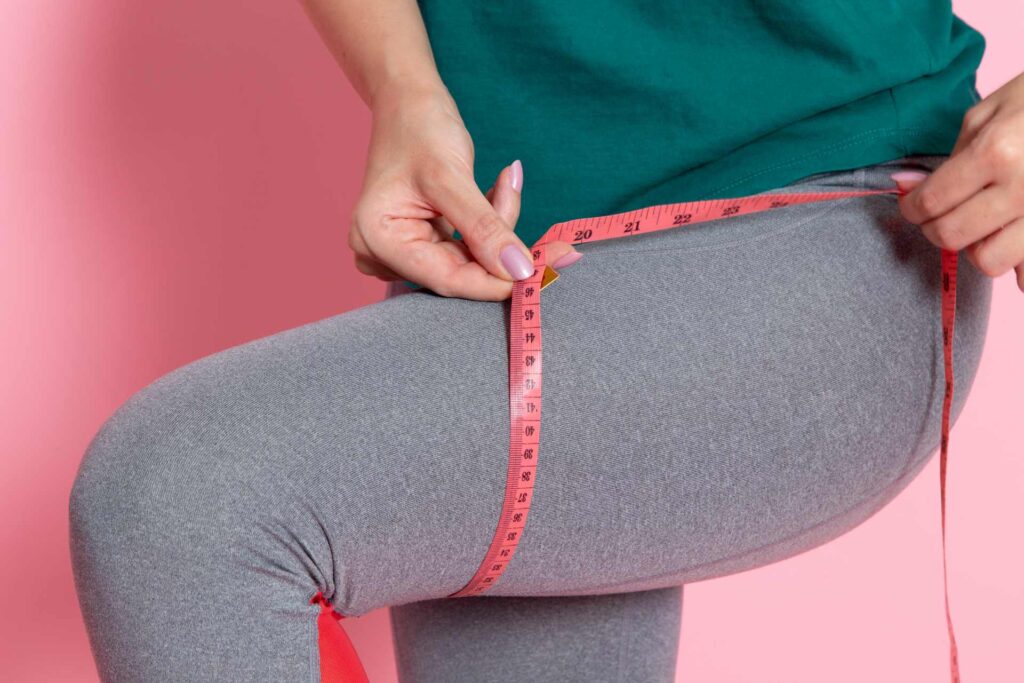
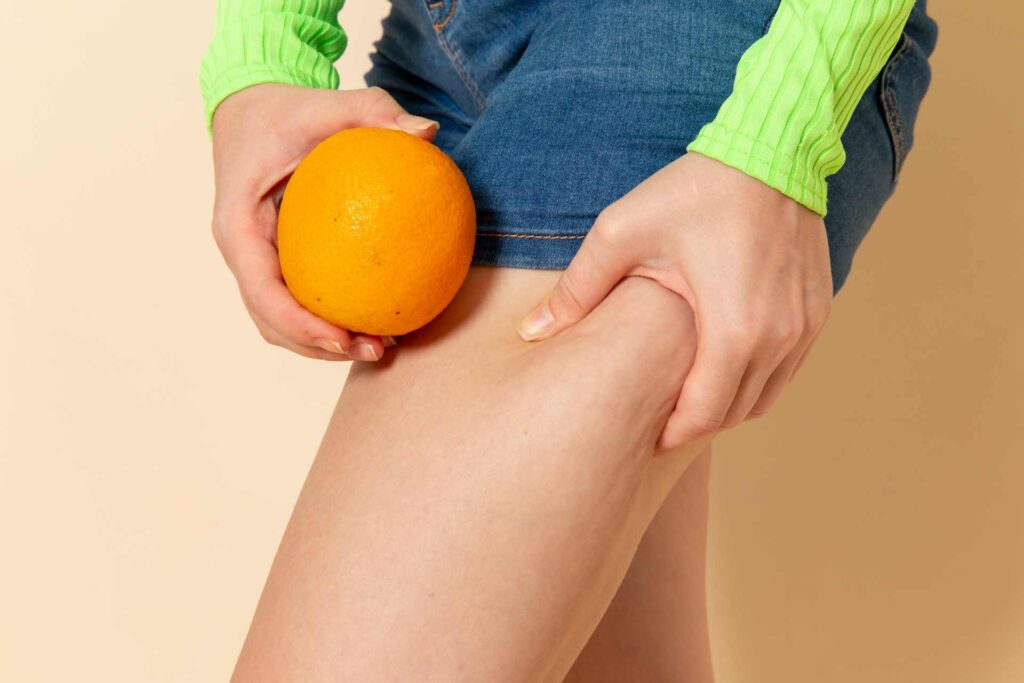
If you’ve been eating well, moving regularly, and still can’t shift the fat on your thighs, there’s a good reason. Thigh fat is one of the most resistant areas of the body to change. Understanding the science behind why can make a difference to how you approach the problem.
This guide covers everything from why thigh fat accumulates in the first place, to what diet and exercise can realistically achieve, to the non-surgical treatments that may help when lifestyle alone isn’t enough.
Key Insights
- Thigh fat is largely driven by oestrogen, genetics, and body type, not simply lifestyle choices
- Spot reduction doesn’t work; overall fat loss is the only way diet and exercise shift it
- Results from lifestyle changes typically take 4–8 weeks to become visible, and may plateau
- Non-invasive treatments like fat freezing, fat cavitation, and FMS can help reduce stubborn pockets and improve tone when other methods have stalled
- Individual results vary; a personalised assessment is always the best starting point
Why is Thigh Fat So Hard to Get Rid Of?
The thighs are among the body’s preferred fat-storage sites, particularly in women. Oestrogen (the primary female sex hormone) actively promotes fat accumulation in the lower body, including the hips, thighs, and buttocks. This pattern, sometimes called gynoid fat distribution, is a natural, hormonally driven feature of the female body.
Hormonal changes during puberty, pregnancy, and menopause can all affect thigh fat distribution, and conditions like Polycystic Ovary Syndrome (PCOS) can also influence where and how fat is stored.
Beyond hormones, genetics play a significant role. If you’re genetically predisposed to store fat in the inner thighs, it will likely be extremely challenging to reduce the area solely through diet and exercise.
There’s also a circulatory factor at work. Thighs have less blood flow compared to other areas, making fat in this region more difficult to mobilise and burn. That’s why it often feels like everywhere else responds first.
Carrying fat on your thighs is entirely normal, especially for women. It doesn’t mean you’re doing something wrong, just human.
Can You Spot Reduce Thigh Fat?
No. Losing thigh or leg fat generally requires more than just spot-reduction exercises. The body doesn’t selectively burn fat from a specific area when you train; it draws on fat stores across the whole body, depending on genetics and hormones. Targeted exercise strengthens and tones the underlying muscles, which can improve the appearance of your thighs over time, but it won’t directly melt the fat sitting on top.
That said, a combination of overall fat loss through diet and cardio, plus lower-body strength training, is the most effective lifestyle approach.
How to Reduce Thigh Fat: Diet and Lifestyle
Nutrition Fundamentals
A caloric deficit is often considered the cornerstone of fat loss, including in the legs. When you consume fewer calories than your body needs to maintain its current weight, it begins to tap into stored fat for energy. You don’t need to be extreme about this – a modest, sustainable deficit of 300–500 calories per day is generally more effective long-term than crash dieting.
Focus on:
- Lean protein (chicken, fish, eggs, legumes) to preserve muscle while losing fat
- Vegetables, fruits, and fibre-rich foods to manage appetite and support overall health
- Reducing processed foods, refined carbohydrates, and added sugars, which drive fat storage
- Watching sodium intake, as excess salt contributes to fluid retention and puffiness around the thighs and legs
Hydration also matters. Staying well-hydrated helps reduce bloating and supports your body’s natural fat metabolism.
Exercise: What Works Best
There are two components worth combining: cardio for overall fat loss and strength training for tone and definition.
- Cardio: Aim for 150–300 minutes of cardio per week. High-intensity interval training (HIIT) and steady-state options, such as brisk walking or cycling, are both effective. HIIT burns significant calories in a shorter time; lower-intensity cardio is easier to sustain and supports recovery.
- Strength Training: Exercises targeting the major thigh muscle groups (squats, lunges, deadlifts, leg presses, and glute bridges) help build muscle beneath the fat. More muscle means a higher resting metabolic rate, which supports ongoing fat loss.
Sleep and Stress
High stress levels increase cortisol, a hormone that can lead to stubborn fat storage, particularly around the lower body for women. Someone who trains daily and eats well but doesn’t sleep enough can find progress stalls completely. Prioritise 7–9 hours of sleep per night and manage stress through whatever works for you.
How Long Does It Take to Lose Thigh Fat?
This is one of the most searched questions, and the honest answer depends on your starting point, consistency, and genetics. With regular workouts and a healthy diet, you may notice changes in 4 to 8 weeks. Results depend on your starting point, genetics, and overall body fat percentage.
For many people over 35, however, hormonal shifts mean the thighs become increasingly resistant even when everything else is working. That’s where non-invasive treatments can offer a meaningful complement to lifestyle efforts.
When Diet and Exercise Aren’t Enough
If you’ve been consistent with your approach and still can’t shift stubborn pockets of fat on your thighs, you’re far from alone. For many people (particularly those navigating hormonal changes or genetic predispositions), lifestyle interventions can only take results so far.
Non-invasive body contouring treatments are designed specifically for this scenario: to reduce localised fat deposits and improve skin texture and tone, without surgery.
Fat Freezing (Cryolipolysis)
Fat freezing (also known as cryolipolysis) works by applying controlled cooling to a targeted area, which triggers the natural death of fat cells without damaging surrounding skin, muscle, or tissue. The treated fat cells are then gradually cleared by the body over several weeks.
Fat Cavitation
Ultrasound fat cavitation uses low-frequency sound waves to disrupt fat cell membranes, releasing the fatty content to be processed and eliminated by the lymphatic system. It’s particularly suited to the outer and inner thighs and complements fat freezing for more comprehensive thigh contouring.
FMS (ferromagnetic Muscle Stimulation)
fMS technology stimulates deep muscle contractions (far more than voluntary exercise can achieve) to build and tone the underlying muscle. In the context of thigh treatment, FMS can improve definition and firmness alongside fat reduction, addressing both the fat and the tone simultaneously. It’s a good option if your goal isn’t just to reduce fat, but to achieve a more sculpted, lifted appearance in the thigh area.
How to Lose Thigh Fat Quickly: Setting Realistic Expectations
There is no medically safe way to lose thigh fat fast. Anyone promising rapid, dramatic results is overstating what the evidence supports.
What is possible is a structured, consistent approach that compounds over time. Combine sound nutrition, regular movement, adequate sleep, and – where lifestyle reaches its limits – evidence-based non-invasive treatments. The combination is what produces the most noticeable and lasting change.
How Body Catalyst Can Help
At Body Catalyst, we work with women and men across Australia who have already put in the effort with diet and exercise and are ready for targeted support to address what remains. Our clinicians conduct thorough consultations to understand your body, your goals, and what’s realistic for you before recommending any treatment.
We offer fat freezing, fat cavitation, FMS body sculpting, and combined treatment protocols designed around your individual needs. Treatment results vary from person to person, and we’re transparent about what you can expect throughout the process.
Ready to explore your options? Book a complimentary consultation at your nearest Body Catalyst clinic and get a personalised assessment from our team.
The information in this article is educational in nature and does not constitute medical advice. Treatments mentioned may not be appropriate for everyone. Individual results vary. Please consult a qualified practitioner to determine the most suitable approach for your needs.